Pre-school Survived 100 Days SVG File Review
As a designer who spends more time behind an embroidery hoop than a computer screen, I approach every new digital asset with a healthy dose of skepticism. When I first opened the Pre-school Survived 100 Days SVG File, I wasn't just looking at cute graphics; I was mentally digitizing the vectors. For those of us in the Crafts and Graphics space, a pretty picture on a screen means nothing if it turns into a thread nest on fabric. This review evaluates this specific digital download from the perspective of a professional creating real-world merchandise, focusing on stitchability, commercial viability, and practical application for your shop.
First Impressions: Vector Quality and Stitch Potential
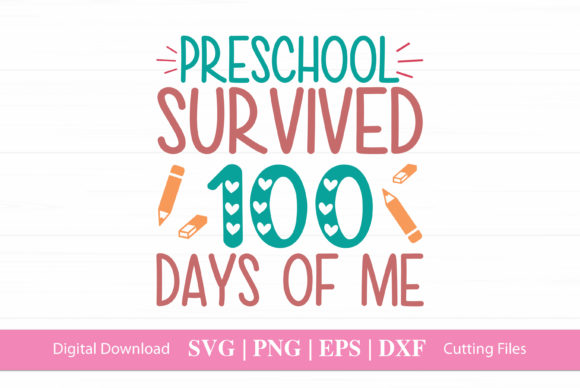
Upon extracting the ZIP folder, which includes the essential SVG, PNG, EPS, and DXF files, my immediate focus was on the node structure of the SVG. For a machine embroidery design, clean vectors are non-negotiable. Messy nodes translate to unnecessary jumps and trims during digitizing. The lines in this "100 Days" milestone design appear crisp, suggesting that converting this into an embroidery file will be straightforward. The typography used for "Survived" and "100 Days" strikes a balance between playful and legible, which is critical when working with small text on children's apparel.
The mood of the design is celebratory yet grounded. It captures that specific exhaustion and pride unique to the 100-day mark. Visually, it feels like it belongs on a soft, heathered sweatshirt or a canvas tote bag rather than formal wear. As a tote bag design, the layout offers enough negative space to accommodate personalization, such as a child’s name or the specific date, without feeling cluttered. This versatility is exactly what I look for when sourcing assets for a craft business.
Real-World Application: The Custom Sweatshirt Test
To truly evaluate this asset, I mentally walked through a recent client project: a custom milestone sweatshirt for an Etsy listing. When planning sweatshirt embroidery, the primary challenge is managing density on fleece. Fleece has texture and stretch, both of which can distort fine details. The Pre-school Survived 100 Days SVG File lends itself well to a mixed-media approach here. I would utilize the provided vector shapes for an applique design base, using a satin stitch border to secure cotton fabric pieces. This reduces overall stitch density compared to a full fill stitch design, keeping the garment soft and wearable.
For the numerical "100," a bold fill stitch works best to ensure readability against the textured fleece background. However, the accompanying text requires careful consideration. If you are selling this as a personalized gift, ensure the lettering height remains above 4mm after resizing to prevent thread breaks. In my experience, designs celebrating school milestones perform exceptionally well as holiday embroidery items or end-of-term gifts because they tap into parental sentimentality. The visual hierarchy in this file supports that emotional connection, making it a strong candidate for high-value custom apparel.
Navigating Fabric Limitations and Hoop Constraints
While the design is versatile, it demands respect for material limitations. Not every fabric is suitable for this level of detail. When considering baby embroidery or items for toddlers, safety and comfort are paramount. Avoid placing dense stitch areas directly over seams or tags. If you intend to use this as an embroidered patch, the design translates beautifully to twill or felt, but you must verify the outer boundary is smooth enough for a merrowed edge.
Be cautious with hoop size selection. While the digital file may fit a 4x4 hoop, cramming a multi-element design into the smallest possible area often leads to registration issues. I recommend testing this in a larger hoop with ample margin for stabilizer. Speaking of stabilizer, this design requires different support depending on the substrate. A cut-away stabilizer is mandatory for stretchy knits to prevent the "100 Days" text from warping after washing. For woven fabrics like tea towels or pillow covers, a tear-away might suffice, but always test first. Dark fabrics present another hurdle; ensure your thread colors offer sufficient contrast. White thread on navy fleece pops, but pastel threads on dark backgrounds may require a white underlay base to maintain vibrancy.
Critical Warning Zones for Makers
- Stretchy Fabrics: Always use a ballpoint needle and cut-away stabilizer to prevent fabric damage and design distortion.
- Tiny Lettering: If scaling down for a onesie, simplify the font or increase spacing. Standard satin stitches fail below 1mm width.
- Curved Surfaces: Caps are tricky. Ensure the design aspect ratio fits the curved cap frame without flattening the "100" numeral.
- Frequent Washing: Secure all applique edges with adequate tack-down stitches. School items get washed often; durability equals customer trust.
Commercial Viability for Etsy Sellers and Shops
For the Etsy seller or small shop product creator, this file represents more than just a graphic; it is a revenue stream component. The inclusion of PNG and EPS formats allows for seamless integration into printable mockup templates. Before stitching a single sample, I use the PNG to create digital previews for my listings. This saves time and materials while validating market interest. However, never rely solely on digital mockups. Customers trust sellers who show photos of the actual finished product. The tactile reality of embroidery sells better than any digital rendering.
When integrating this into your design assets library, consider brand consistency. Does this playful, milestone-focused aesthetic align with your existing shop vibe? If you specialize in minimalist line art, this bolder celebration theme might feel out of place unless positioned as a seasonal special. Conversely, if you focus on family milestones, this digital embroidery file fills a specific gap in the 100-day niche. Remember to verify licensing terms within the download before offering commercial embroidery services or selling physical goods. Protecting your business starts with respecting intellectual property.
Designer Notes: Pre-Stitch Checklist
Before loading this design into your machine for a client order or shop stock, run through this practical checklist derived from years of production experience:
- Test on Scrap: Never assume factory settings work. Test the Pre-school Survived 100 Days SVG File on the exact fabric weight you plan to sell.
- Check Contrast: View your thread palette in natural light. What looks good on screen may vanish on fabric.
- Review Density: Use your digitizing software to analyze stitch count. High density on lightweight fabric causes puckering.
- Mockup Validation: Create both light and dark background mockups to see how the design adapts visually.
- Licensing Confirmation: Double-check if the license permits selling finished handmade products versus digital redistribution.
- Stabilizer Match: Pair the stabilizer type to the fabric drape, not just the stitch count.
Ultimately, the Pre-school Survived 100 Days SVG File is a robust starting point for makers who understand the translation from screen to stitch. It offers the flexibility needed for custom apparel and the sentimental value required for meaningful gifts. By approaching this file with technical awareness and commercial intent, you transform a simple digital download into a professional-grade product that resonates with parents and celebrates genuine milestones. Whether you are crafting a boutique collection or fulfilling a personalized request, let practical judgment guide your needle.